


What Makes a Gemstone "Rare"?

When people think of valuable gemstones, diamonds are often the first stones that come to mind. For decades, diamonds have dominated jewellery stores, engagement rings, and popular culture.
Yet many collectors and gem enthusiasts know a surprising truth: some gemstones are far rarer than diamonds and can command significantly higher prices per carat.
So what exactly makes a gemstone rare?
Is rarity simply about how difficult a stone is to find, or are there other factors involved?
Understanding gemstone rarity requires looking beyond appearances and examining the complex relationship between geology, supply, demand, and market perception.
Rarity and Popularity Are Not the Same Thing
One of the biggest misconceptions in the gemstone market is that the most popular gemstones must also be the rarest.
In reality, popularity and rarity are often very different concepts.
Diamonds are a good example. While high-quality diamonds are undoubtedly valuable and widely recognised, diamonds themselves are not particularly rare in geological terms. Significant diamond deposits have been discovered in countries including Botswana, Canada, Russia, South Africa and Australia, with millions of carats mined each year.
By comparison, many collectors have never heard of Cuprian Tourmaline, one of the most remarkable gemstones discovered in recent decades. What makes this gem extraordinary is the presence of copper within its crystal structure, producing vivid electric blue, turquoise and neon green colours unlike those seen in most other gemstones.
The finest Cuprian Tourmalines, often referred to as Paraiba-type Tourmalines, are found in extremely limited quantities. While small deposits have been discovered in a handful of locations, truly exceptional stones displaying intense colour, high clarity and desirable size are exceptionally rare. Many mines produce only small quantities, and finding a top-quality specimen can be a once-in-a-lifetime event.
As a result, Cuprian Tourmaline remains relatively unknown to the general public despite being highly sought after by collectors and gemstone connoisseurs worldwide. This highlights an important distinction: a gemstone can be enormously popular and relatively abundant, or exceptionally rare yet known only to specialists.
Popularity influences demand. Rarity influences supply. When a gemstone combines both—such as the world's finest Cuprian Tourmalines—the result can be extraordinary value and enduring collector appeal.
Geological Rarity: Nature's Limited Supply
The first component of rarity is geological scarcity.
Gemstones form under highly specific conditions involving temperature, pressure, chemistry, and time. Some gemstones require such unusual combinations of elements and geological events that they occur only in a few locations on Earth.
For example, certain gemstones require trace amounts of rare elements such as beryllium, chromium, vanadium, lithium, or boron. If these elements are not present in the right quantities during formation, the gemstone simply cannot develop.
In some cases, a gemstone may only be found in one mine or geographic region.
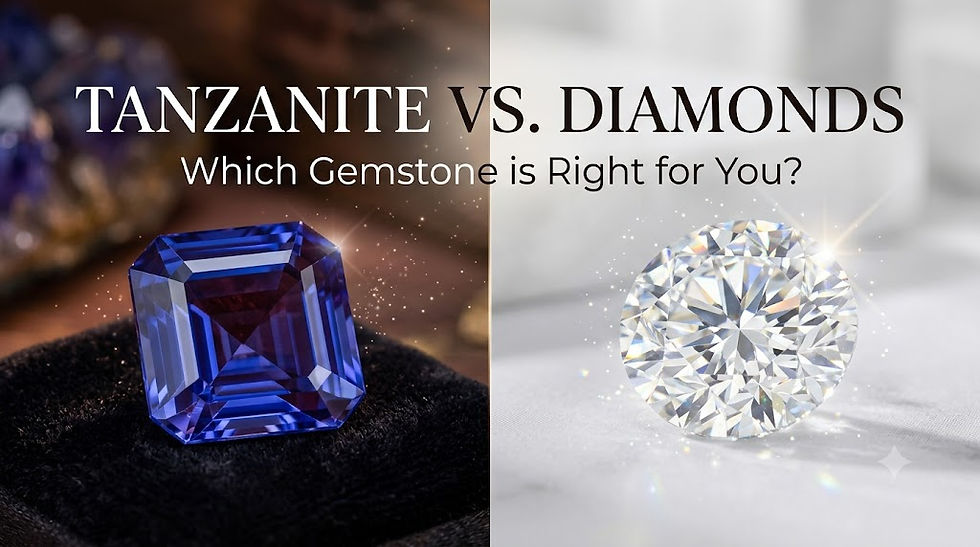
Tanzanite is a famous example. This beautiful blue-violet gemstone is found almost exclusively in a small area near Mount Kilimanjaro in Tanzania. Because the source is so limited, concerns about future supply have contributed significantly to its value.
Similarly, Paraiba Tourmaline's extraordinary neon blue colour results from copper-bearing deposits found in only a few locations worldwide.
The more restricted the geological occurrence, the rarer the gemstone becomes.
Quality Matters as Much as Quantity
A gemstone species may be relatively available, yet fine-quality specimens can still be exceptionally rare.
Take sapphire as an example.
Sapphires are mined in several countries and are not generally considered rare. However, an unheated sapphire displaying exceptional colour, clarity, cut, and size can be extraordinarily scarce.
The same applies to emeralds, rubies, and diamonds.
Most gemstones extracted from the earth never become high-end jewellery stones. They may contain inclusions, fractures, undesirable colours, or poor crystal structure.
As a result, the percentage of gem-quality material can be remarkably small.
This means that even when a gemstone species is relatively common, investment-grade examples may be genuinely rare.
The Role of Supply and Demand
In economics, value is largely determined by the relationship between supply and demand.
A gemstone with very limited supply and strong demand will generally increase in value.
Conversely, a gemstone with abundant supply and weak demand may remain relatively inexpensive.
The gemstone market provides countless examples of this principle.
Diamonds benefit from strong consumer demand, particularly in engagement jewellery. Although supply is substantial, demand has historically remained high.
Rare collector stones often operate differently. Supply may be extremely limited, but demand can vary depending on collector interest, fashion trends, and public awareness.
When a rare gemstone gains recognition, prices can rise dramatically because additional supply simply cannot be created.
This is one reason why collectors often monitor emerging gemstone categories before they become widely known.
Why Some Gemstones Are Worth More Than Diamonds
Many people are surprised to learn that certain gemstones can sell for far more than diamonds on a per-carat basis.
The reason is simple: true rarity.
A flawless diamond is certainly valuable, but there may be thousands of comparable diamonds available globally.
By contrast, a museum-quality specimen of a genuinely rare gemstone may have only a handful of comparable examples in existence.
Collectors are often willing to pay substantial premiums for stones that are:
Exceptionally rare
Highly desirable
Difficult to replace
Historically significant
From exhausted or declining sources
Some of the world's most valuable gemstones include:
Red Beryl
Musgravite
Painite
Alexandrite
Paraiba Tourmaline
Fine Burmese Rubies
Kashmir Sapphires
In some cases, these stones can fetch prices many times higher than those of equivalent diamonds.
The Importance of Provenance
Another factor influencing rarity is provenance—the documented origin of a gemstone.
Collectors frequently place additional value on stones from famous mining regions.
Examples include:
Kashmir sapphires
Burmese rubies
Colombian emeralds
Australian black opals
Even if similar stones exist elsewhere, gems from historically important localities often command premium prices because their sources may be depleted or producing limited quantities.
A gemstone's story can become part of its rarity.
Treatment and Natural Condition
Natural, untreated gemstones are becoming increasingly sought after.
Many gemstones on the market undergo treatments designed to improve colour or clarity. While these treatments are generally accepted, untreated stones are often considerably rarer.
For example:
Unheated sapphires
Untreated rubies
Natural emeralds with minimal enhancement
can attract significant premiums because they represent nature's original creation without human intervention.
As collectors become more sophisticated, demand for untreated stones continues to grow.
The Collector's Perspective
For serious collectors, rarity often matters more than size.
A one-carat gemstone that exists in only a few dozen examples worldwide may be more desirable than a much larger stone that can be readily purchased.
Collectors often seek:
Unique colours
Unusual crystal structures
Rare origins
Exceptional transparency
Documented provenance
The thrill lies in owning something that very few people will ever possess.
Unlike mass-market jewellery, rare gemstone collecting is often driven by exclusivity, discovery, and appreciation of natural wonders.
Looking Beyond Diamonds
Diamonds will always have an important place in the jewellery industry, but they represent only a small part of the fascinating world of gemstones.
For collectors and investors, some of the most exciting opportunities lie in lesser-known gems whose rarity is grounded in genuine geological scarcity rather than marketing or tradition.
Understanding the difference between rarity and popularity can open the door to an entirely new appreciation of gemstones.
The rarest gems on Earth are more than beautiful objects. They are remarkable geological events—natural treasures that may never be replicated.
Whether you are a collector, investor, or simply fascinated by the natural world, rare gemstones offer a unique combination of beauty, science, history, and scarcity that few other assets can match.
And that is what truly makes a gemstone rare.
Comments